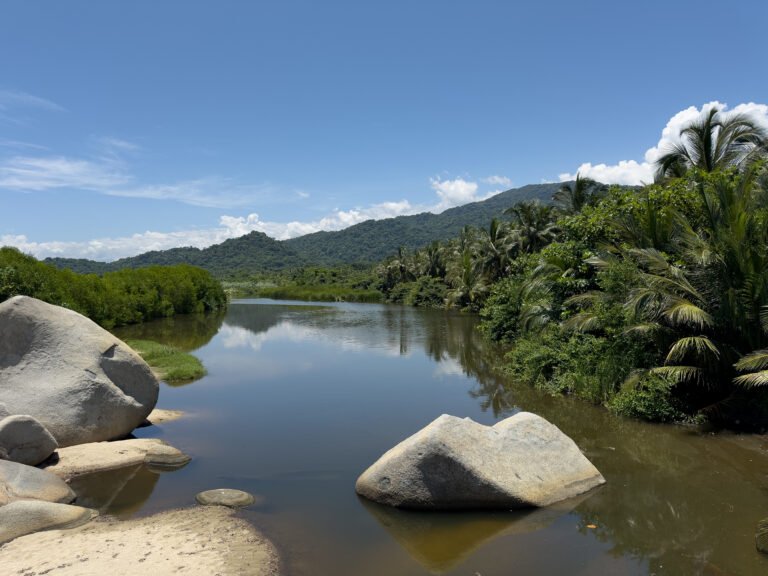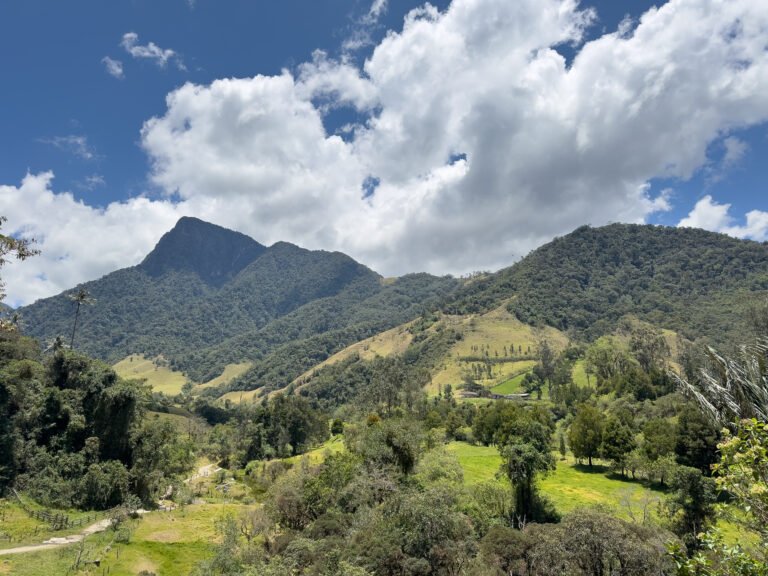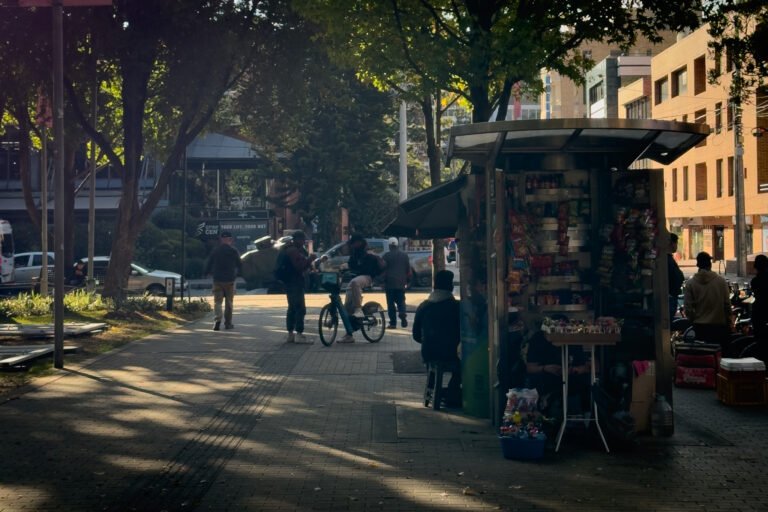
We spent four nights in Palomino, from September 3 to 7, 2024, halfway through our four-week trip around Colombia, after two nights near Tayrona National Park.
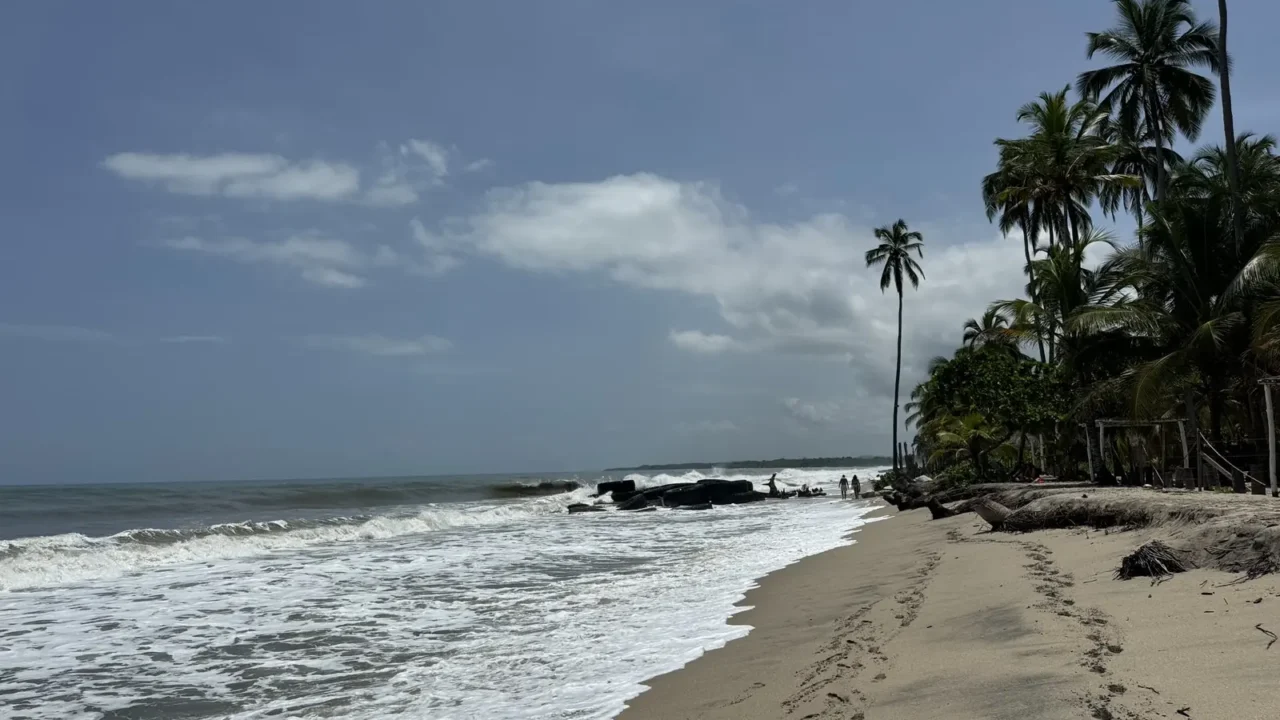
Palomino is a small seaside village on Colombia’s Caribbean coast, just inside the department of La Guajira. If you’ve seen postcard beach photos, adjust your expectations: the sea has been eating away at the village year after year, and what we found were strong waves, sandbags and beach bars broken by the water. The village itself is quiet and good for resting a few days. In this guide we cover how we got there, what there is to do, where to stay and what to know before you go.
This article contains affiliate links. If you book through them, we may earn a commission at no extra cost to you.
In this article
How to Get to Palomino
Palomino sits on the main road between Santa Marta and Riohacha, and that’s the road the buses use. There are no fixed stops: you flag the bus down on the road, and once on board you tell the fare collector where you want to get off.
We arrived from Mendihuaca, the beach area where we stayed to visit Tayrona National Park. Because of the heat, we let the local buses go by and took a bigger one, in better condition. We asked the driver to stop at the Palomino gas station and walked to our hotel from there.
To get back to Santa Marta we did the same in reverse: one of the big buses that run often along the main road dropped us at the Santa Marta bus terminal. We paid 20,000 Colombian pesos (COP) per person.
- From Santa Marta: the Salt in our Hair guide (updated April 2024) says about 2 hours and 10,000 to 15,000 pesos; Gecko Routes (updated May 2026) says 1 hour 30 minutes, from 12,000 pesos. Both were checked on November 18, 2026.
- From Cartagena: we took the Marsol bus from Cartagena to Santa Marta, spent a night in Santa Marta and went on from there to Tayrona and Palomino. If you’re still planning your first stop, see where to stay in Cartagena.
- In the village: we always walked, between the hotel, the beach and the village.
What to Do in Palomino
The Beach: Swim Only with Care
Palomino beach is wide, with palm trees right down to the sand, but the sea isn’t calm. Up close, we saw what erosion is doing here: broken concrete walls, sandbags and wooden beach decks with the waves crashing underneath. The Salt in our Hair guide (April 2024) warns that swimming on this coast isn’t safe because of the currents. Still, we swam in September, always carefully.

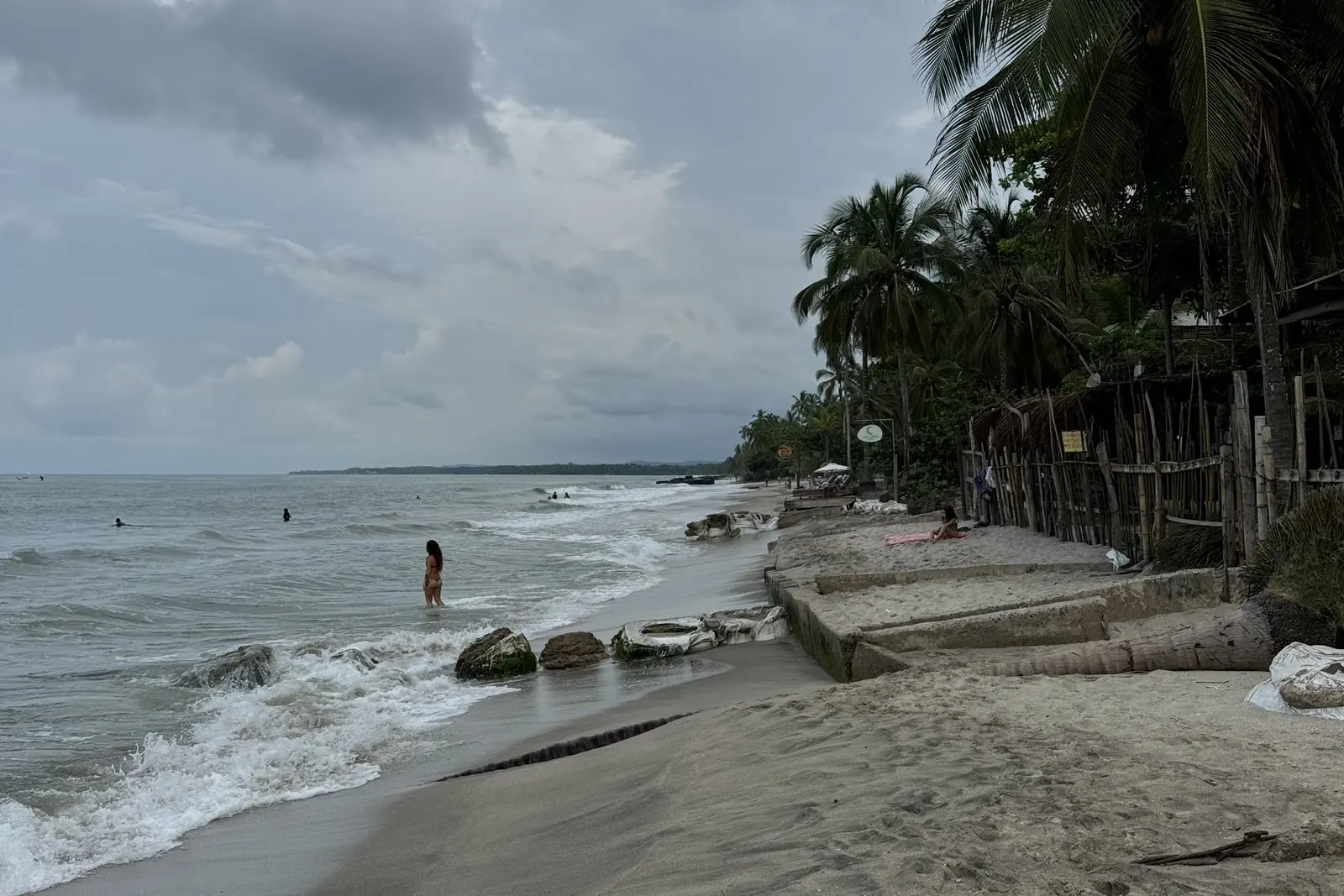

Who it suits: anyone who likes a wild beach, walking on the sand in the late afternoon and going into the sea with care.
Who it doesn’t suit: anyone looking for a calm-water beach. For that, the beaches inside Tayrona National Park, such as La Piscina, are a better bet.
Tubing on the Palomino River
It’s the activity a lot of people come to Palomino for: you float down the river sitting in an inner tube to where it meets the sea. According to Salt in our Hair (April 2024, checked November 18, 2026), an operator in the village takes you by motorbike or van to near the river, you walk about 30 minutes carrying the tube and then spend about 2 hours 30 minutes floating down, for 40,000 to 50,000 COP including transportation. The same guide notes that when the river is low the float can get very slow or not happen at all, so ask at your hotel before you pay.
We didn’t go tubing, so this is only what the guides say.
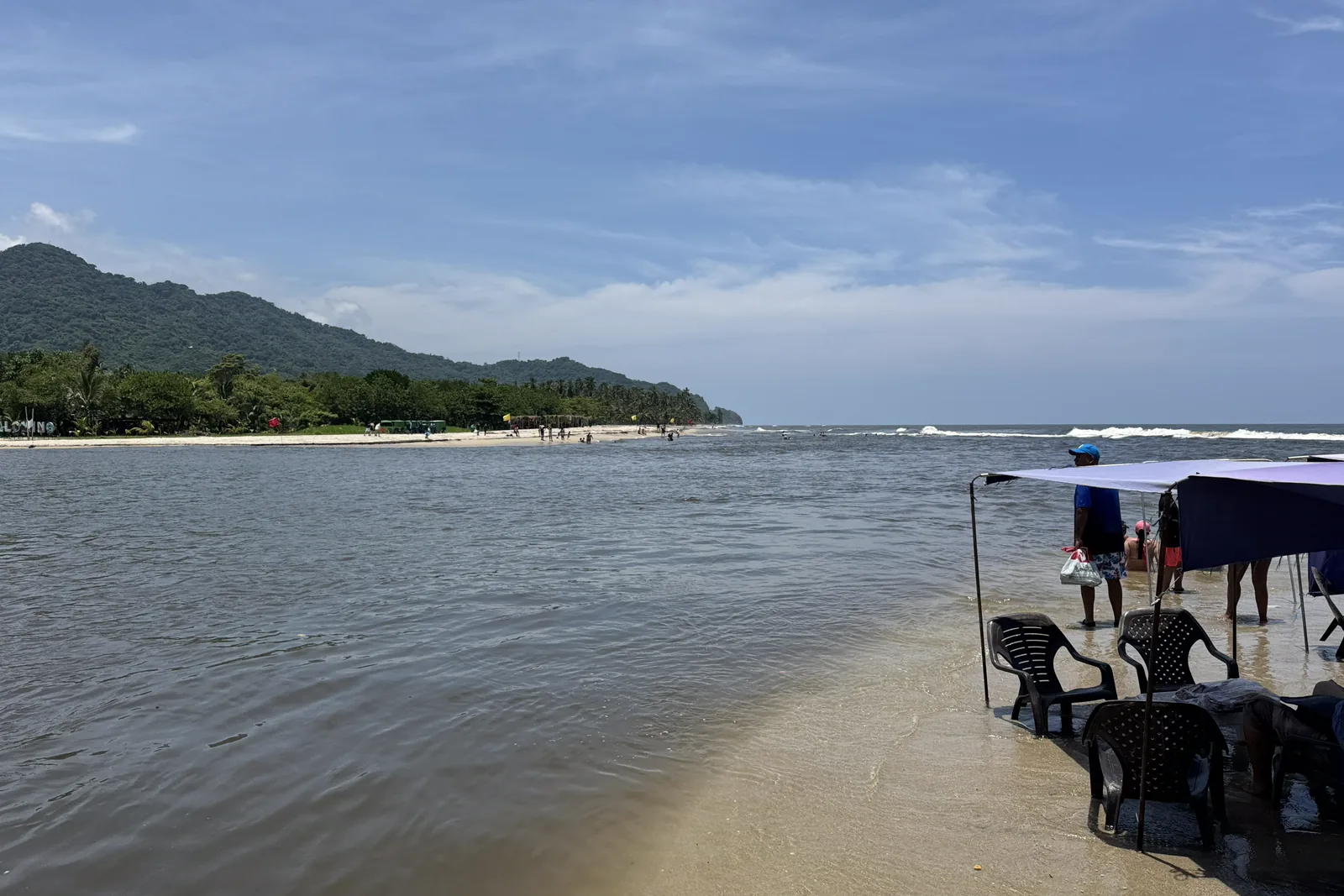
Resting
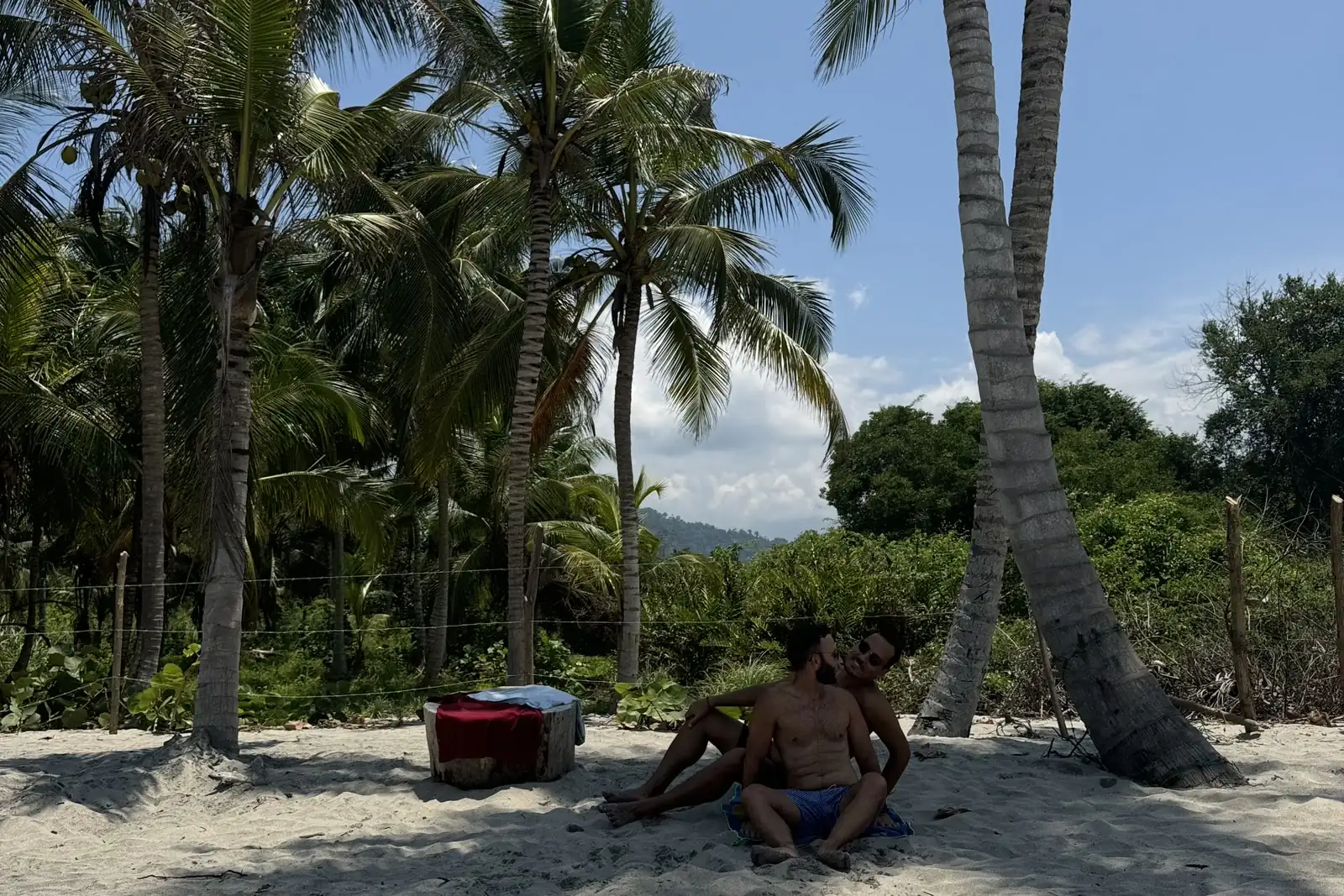
That’s what we used Palomino for: after Cartagena and the hike in Tayrona, four nights in a quiet village, with no rush. Our days were beach and rest, without big plans.
Where to Stay in Palomino
We spent all four nights at the Hotel Renasci Palomino and paid €137.79 in total, for the two of us. We liked it: the hotel is very pleasant, the hosts are very welcoming and the homemade breakfast is what set it apart. The downside is the distance to the beach: its Booking.com listing puts it about 2.9 km (1.8 miles) away (checked November 18, 2026), and we walked there.
Our verdict: we recommend the Renasci if you’d rather have quiet and a good breakfast than the sea at your door.

If you’d rather stay by the sea, these three are close to the beach and suit different trips. We didn’t sleep at any of them; we opened their Booking.com listings on November 18, 2026:
- Hostel: Tiki Hut Hostel, by the beach, between the Palomino and San Salvador rivers, with a pool and a restaurant, according to the listing. For backpackers on a tight budget.
- Boutique: Casa del Pavo Real Boutique Hotel Yoga & Spa, a 4-minute walk from the beach, with a pool, air-conditioned rooms and a vegetarian breakfast, according to the listing.
- Beachfront: Hotel Chiniu, on the road to Riohacha, a few steps from the beach, with a pool and a private beach area, according to the listing.
Hotel Renasci Palomino
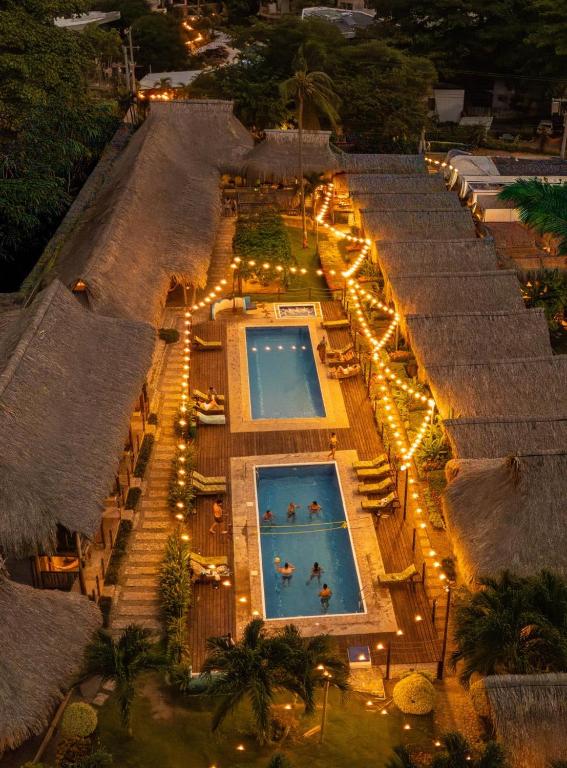
Tiki Hut Hostel

Casa del Pavo Real Boutique Hotel Yoga & Spa

Hotel Chiniu
Only the Renasci has a price, because it’s the only one we slept in. Compare your own dates on Booking.com. If you’d rather sleep closer to the park entrance, our guide to where to stay in Tayrona National Park compares Los Naranjos, El Zaino and the Guachaca and Palomino area.
Where to Eat in Palomino
We ate at Paluna Beach Restaurant, Alma Cucina de Autor and Coffee History Colombia.
Safety and Practical Tips
- We felt safe. In September 2024 we had no problems in Palomino or anywhere else in Colombia, taking the usual precautions. That’s our experience: before you go, read the current official travel advice for Colombia from Portugal’s foreign ministry (Portal das Comunidades Portuguesas, in Portuguese) (checked November 19, 2026).
- The sea is the biggest risk. Strong currents and big waves, according to Salt in our Hair (April 2024). If you don’t know the beach, stay out of the water.
- Bring cash. Both guides we checked say there’s no ATM in Palomino; Gecko Routes (May 2026) adds that the nearest one is about 20 minutes away and sometimes runs out of bills.
- Buses without fixed stops. Talk to the fare collector when you get on, so they can tell you where to get off.
Best Time to Visit Palomino
We went in September 2024. Salt in our Hair (April 2024) points to December to March as the dry season, with better weather but also more people and higher prices, and a lower river for tubing. To avoid the crowds, the same guide suggests April and May or October and November, with a higher chance of rain.
FAQs: Palomino, Colombia
How do I get from Santa Marta to Palomino?
By bus, along the main road toward Riohacha. Our way back from Palomino to Santa Marta was a big bus that dropped us at the bus terminal. Guides we checked on November 18, 2026, say the trip takes 1 hour 30 minutes to 2 hours.
How much is the bus between Palomino and Santa Marta?
We paid 20,000 COP per person, from Palomino to Santa Marta, in September 2024.
Can you swim at Palomino beach?
The sea has strong waves and currents, and erosion is taking away part of the beach. The guides we checked advise against swimming. We swam in September 2024, but very carefully.
How does tubing on the Palomino River work?
An operator takes you near the river, you walk about 30 minutes and float about 2 hours 30 minutes down to the sea, for 40,000 to 50,000 pesos including transportation, according to Salt in our Hair (April 2024). Ask about the water level first.
How many days should I spend in Palomino?
We stayed four nights, but 2 or 3 would have been enough.
Is there an ATM in Palomino?
According to the guides we checked (2024 and 2026), no. Bring cash from Santa Marta.
Is Palomino Worth Visiting?
It’s worth it for resting a few days after Tayrona, and 2 to 3 nights are enough. For us, Palomino was a break between Tayrona and heading back to Santa Marta, and our four-week Colombia itinerary shows how we fit it into the rest of the trip. If you’re planning your trip, see all our Colombia destinations.