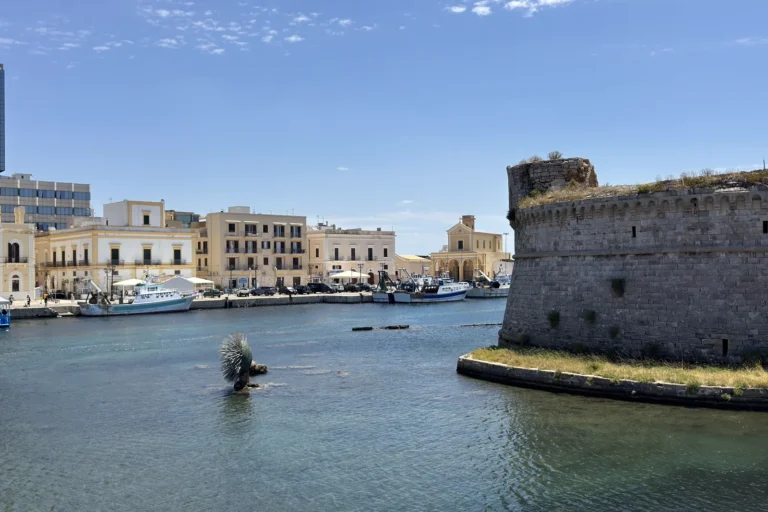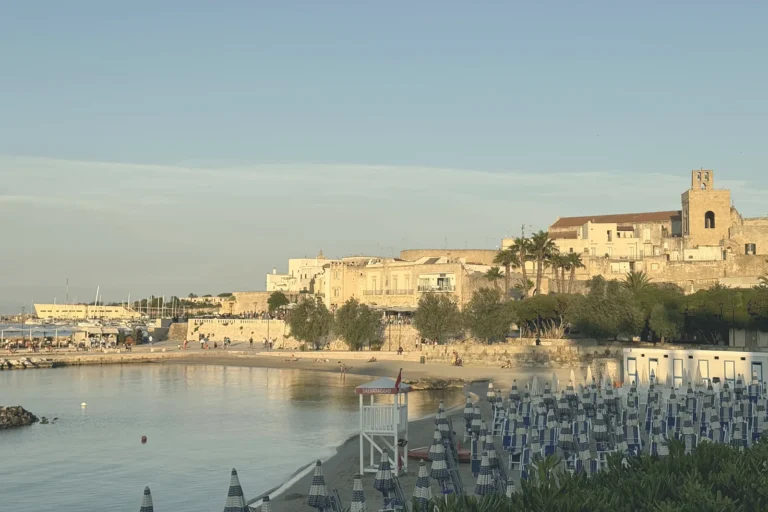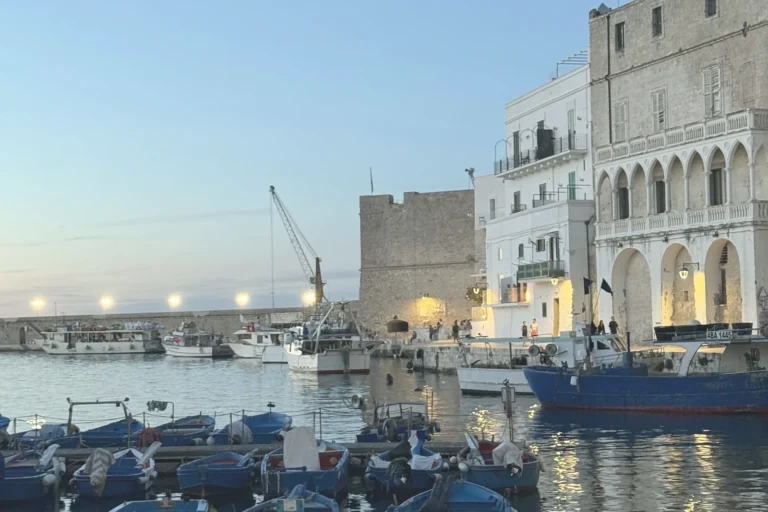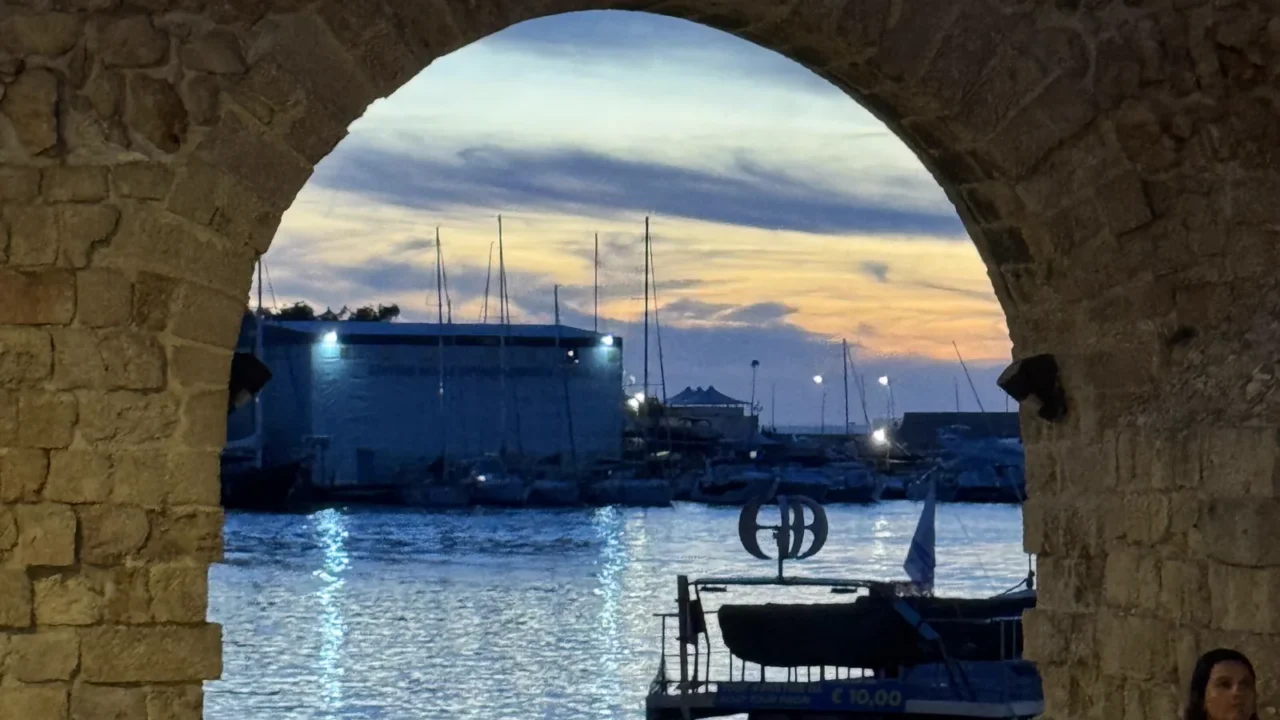
We did Puglia by car and never took a train. So everything you read here about trains comes from official Trenitalia pages, read on November 17, 2026, and not from our own experience. We put the source on each point and said so when we found no data.
What we can tell you from experience is where we needed the car: at the beaches, at the masserias and in the inland towns. Without a car we would have had to arrange transport or tours to these unmissable places in Puglia, and our opinion is that Puglia without a car only works with tours. If you are choosing between the two, our guide to renting a car in Puglia covers the other side.
This article contains affiliate links. If you book through them, we may earn a commission at no extra cost to you.
In this article
What the Train Does Well and Where It Falls Short
– It works well along the coast between Bari and Lecce, with stops at Polignano a Mare, Monopoli and Ostuni. Brindisi only has the fast train. – It needs a bus for Alberobello, Martina Franca, Otranto and the center of Ostuni. – We could not confirm the links to Gallipoli, Santa Maria di Leuca and Matera: we found no official pages with timetables.
The Bari to Lecce Line
This is the backbone of the region. Regional trains on the Bari to Lecce line stop at Polignano a Mare, Monopoli, Ostuni and Lecce, according to Trenitalia’s page for the line. The page gives no times or frequency.
There is also the Apulia Express, the fast link between Lecce and Bari, which stops at Brindisi, Monopoli and Ostuni. It takes 1 hour 27 minutes with a guaranteed seat and runs daily. Times checked November 17, 2026 (source):
– Lecce 6:41, Bari 8:08 (R 4392) – Lecce 7:18, Bari 8:45 (R 4450) – Bari 15:45, Lecce 17:12 (R 4447) – Bari 17:45, Lecce 19:12 (R 4451)
Buy a single ticket (“corsa semplice”) for the chosen train; the seat reservation is free. The standard regional ticket is not valid on this train.
How Much It Costs
Regional tickets in Puglia are priced by distance (the table excludes the Bari urban area). The table in force since February 11, 2026 gives, for example, €1.30 up to 15 km, €4.40 between 46 and 50 km and €15.80 between 171 and 180 km (Trenitalia fare table). Children under 10 travel free with a ticketed adult.
We found no official table per route, so we cannot give you the exact price from Bari to Monopoli or Lecce. Check the Trenitalia app or website before you travel.
Alberobello, Locorotondo and Martina Franca
The coastal line does not serve these towns. Trenitalia sells the Trulli Link: a train to Bari, then a bus run by FS Sud Est, with stops at Turi, Putignano, Alberobello, Locorotondo and Martina Franca. It leaves from the FS Park terminal on Via Capruzzi, next to Bari Centrale station. The bus to Martina Franca costs €5.20, added to the train fare (source). The page gives no times or frequency.
We found no official timetable for this bus, so check it before you travel.
Ostuni
Ostuni has a station, but the white town sits on the hill. Ostuni Link is a bus from the station to a terminus; from there, Piazza della Libertà in the old town is a few minutes on foot. The bus costs €1.10, added to the train fare (source). The page does not say how long the bus ride takes.

Otranto and Salento
For Otranto, Trenitalia sells the Otranto Link: a train to Lecce, then an FSE bus that leaves from Via Don Bosco, near the station. It costs €3.40, added to the train. It is promoted as a summer service, with no dates or times on the page (source).
For Gallipoli and Santa Maria di Leuca we found no official train information. Trenitalia also lists seasonal connecting buses, timed with the regional trains, to beaches near Monopoli, Capitolo, Porto Cesareo and Otranto. If your itinerary goes beyond Lecce and Otranto, check before you decide to go without a car.
From Bari Airport to the Center
A train links Bari-Palese airport to Bari Centrale in about 15 minutes, with 34 connections a day, and costs €5.30 (source). This ticket is bought in a single transaction, with “Bari Aeroporto Karol Wojtyla” as the origin or destination.
We preferred to pick up our car at the airport, as we tell in our 10-day Puglia itinerary.
Tickets: What to Know
– Paper ticket: it must be validated before boarding, at the machines in the station where your journey starts. You can validate it until 23:59 on the date printed, and once validated it cannot be transferred (Trenitalia Service Charter 2025). – Digital ticket: one bought on the website or app needs no validation. It is named, and you must show it with an ID. – Fine: regional law sets €100 for traveling without a ticket or without validation, reduced to €50 plus the ticket if you pay within 30 days (Trenitalia fare table). If you already have a paper ticket and every machine in the station is broken, go to the train staff and you pay nothing extra. – Strikes: Trenitalia only guarantees minimum services and publishes them in the official timetable. We found no dates or specific risk level for Puglia.
Day Tours, If You Go Without a Car
If you go by train, we suggest combining it with day tours to the inland and the coast, for example Alberobello and Matera. We did none, because we had a car, so we can’t recommend a specific one. You can browse day tours in Puglia on GetYourGuide (affiliate link) and choose by reviews and departure point.
Train or Car: How to Decide
We did 10 nights by car, with masserias along the way, and the full route is in our itinerary. We took neither tours nor trains, because with a car it made no sense.
Trains themselves don’t put us off: on an earlier trip we spent 15 days by train in Italy, from Milan to Sicily, ending in Parma, and we did the Cinque Terre the same way. Trains in Italy work very well, with plenty of timetables and many cities and towns covered. In Puglia the problem is coverage: much of what is most worth seeing is off the line. To decide on the car, see the cost, insurance and ZTLs in our guide to renting a car in Puglia. To choose where to sleep, see our guide on where to stay in Puglia.
FAQs About Puglia by Train
Can you visit Puglia only by train?
You can cover the coast between Bari and Lecce, with stops at Polignano a Mare, Monopoli and Ostuni. For Alberobello, Martina Franca, Otranto and the center of Ostuni you need connecting buses.
How long does the fast train from Bari to Lecce take?
The Apulia Express takes 1 hour 27 minutes with a guaranteed seat, according to Trenitalia (checked November 17, 2026). There are two morning departures from Lecce (6:41 and 7:18) and two afternoon ones from Bari (15:45 and 17:45). The standard regional ticket is not valid on it.
How do I get from Bari airport to the city by train?
A train runs between the airport and Bari Centrale, about 15 minutes and €5.30, according to Trenitalia.
Do I need to validate my ticket?
Yes, if it is a paper ticket: validate it at the station before boarding. A digital ticket needs no validation.
Did the authors do Puglia by train?
No. We did the trip by car in June 2026, and the train data comes from Trenitalia’s official pages. We have traveled by train in Italy on other trips, and it went very well.
If you want more Italy, take a look at our Italy guide.